


Anxiety rarely arrives quietly. It often brings with it a particular kind of mental repetition, where the same worry returns again and again without resolution. This pattern, known as rumination, is one of the strongest known contributors to poor sleep. Understanding how anxiety and rumination interact, and why this combination disrupts rest so effectively, helps explain why so many people lie awake at night despite feeling tired enough to sleep.
Sleep difficulty connected to anxiety is not simply about having too many thoughts. It is about a specific cycle in which worry, repetitive thinking, and physiological arousal reinforce one another. Recognizing this cycle is often the first step toward interrupting it.
What Rumination Actually Is
Rumination is frequently confused with ordinary thinking, but the two are not the same. Ordinary thinking moves forward. It considers a problem, weighs options, and eventually settles somewhere, even if temporarily. Rumination does not move. It circles.
A person experiencing rumination tends to return to the same thought repeatedly, often without reaching a new conclusion or any sense of resolution. The content varies. It might involve a conversation that did not go as planned, a decision that has not yet been made, or a vague sense that something is wrong without a clear cause. What remains constant is the repetition itself.
This distinction matters because rumination is not simply intense worrying. It is a self-sustaining mental loop, and loops of this kind are particularly difficult for the brain to exit once the body is trying to rest.
How Anxiety Fuels the Loop
Anxiety and rumination tend to occur together because each one strengthens the other.
Anxiety creates a heightened sense that something needs attention or resolution. This sense of unfinished business is precisely what keeps the mind returning to a thought rather than letting it settle. At the same time, rumination keeps the nervous system activated, because each repetition of a worrying thought can trigger a fresh wave of physiological stress response, including increased heart rate and shallow breathing.
In this way, anxiety provides the emotional charge that rumination needs to continue, while rumination provides anxiety with a steady stream of material to focus on. Neither tends to fade on its own once this pattern is established, particularly at night when there is little else competing for attention.
Why Nighttime Intensifies the Pattern
During the day, rumination is frequently interrupted. Conversations, tasks, and environmental stimulation pull attention elsewhere, even when underlying anxiety remains present. At night, those interruptions disappear.
Once the body settles into stillness, the brain does not automatically follow. Falling asleep requires a gradual reduction in cognitive and physiological activity, often described as a winding down process. When anxiety and rumination are present, this winding down process is interrupted before it can complete. The mind remains engaged in analysis precisely when it needs to disengage.
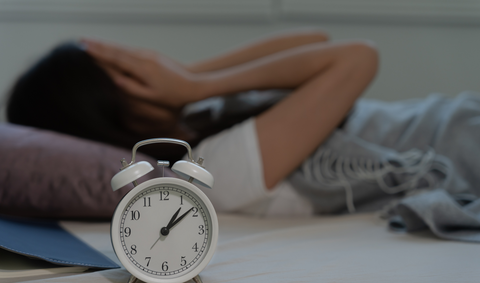
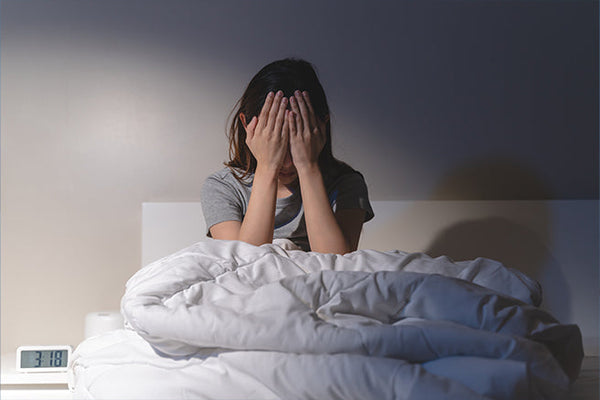
This is one of the more frustrating aspects of anxiety-related sleep disruption. The body may be lying still in a dark, quiet room, technically positioned for sleep, while the mind continues operating as though it were still solving a problem.
The Physiological Cost of a Racing Mind
Rumination is not only a mental experience. It carries a measurable physiological signature.
When the brain repeatedly returns to a worrying thought, the body's stress response activates alongside it. This includes the release of cortisol, a hormone that increases alertness and works against the natural processes that prepare the body for sleep. Heart rate may stay elevated, muscles may remain tense, and breathing often becomes shallower than it would during a relaxed state.
This means that someone who appears to be resting quietly in bed may, internally, be in a state closer to mild physiological alarm. Sleep becomes difficult not because the body lacks tiredness, but because it is receiving conflicting signals. One system is requesting rest. Another is signaling that vigilance is still required.
How This Affects Sleep Quality, Not Just Sleep Onset
Anxiety-driven rumination is often discussed only in terms of difficulty falling asleep, but its effects frequently extend further.
Even after sleep begins, residual physiological arousal can interfere with the depth of rest achieved. This may result in more frequent waking during the night, lighter sleep stages, and a reduced amount of time spent in deeper, restorative sleep. Someone affected by this pattern may sleep for a full eight hours and still wake feeling as though rest never fully occurred.
This distinction matters because it shifts the conversation away from hours slept and toward the quality of those hours. A person can technically meet sleep duration recommendations while still experiencing the effects of poor sleep quality, including daytime fatigue, irritability, and difficulty concentrating.
The Bidirectional Relationship Between Sleep and Anxiety
Perhaps the most important aspect of this connection is that it runs in both directions.
Poor sleep does not only result from anxiety. It also intensifies it. Ssleep deprivation is linked with reduced activity in brain regions responsible for emotional regulation and rational evaluation of threat. In practical terms, this means that a poorly rested brain is more likely to interpret neutral situations as threatening and more likely to ruminate the following night.
This creates a self-reinforcing cycle. Anxiety disrupts sleep, disrupted sleep increases anxiety sensitivity, and increased anxiety sensitivity makes rumination more likely the next time the mind is left alone in a quiet room. Without intervention, this cycle tends to strengthen rather than resolve on its own.
Recognizing the Pattern
Anxiety-related rumination at night often shows certain recognizable signs. These include lying awake while reviewing the same concern repeatedly, feeling physically tired but mentally alert once the lights go off, noticing a racing heart or tense muscles despite no immediate physical cause, and waking during the night with a thought already in progress, as though the mind never fully stopped working.
Recognizing these signs is useful because it shifts the issue from a vague sense of bad sleep into something more specific and more addressable.
Approaches That May Help Reduce the Pattern
Several approaches have shown value in reducing the intensity of anxiety-driven rumination at night.
Establishing a consistent pre-sleep routine can help signal to the nervous system that the day's demands have ended. Writing down unresolved thoughts before bed allows some of the mental load to be externalized rather than held internally. Slow, deliberate breathing exercises can directly counter the physiological arousal associated with rumination by activating the body's relaxation response. Limiting screen exposure before bed may also help, since bright light and engaging content can both delay the natural winding down process.
These strategies do not eliminate anxiety, but they can reduce the conditions that allow rumination to take hold once the lights go off.
When the Pattern Persists
Occasional nights of racing thoughts are a normal part of life. When this pattern becomes frequent, lasting several weeks or longer, and begins affecting daytime functioning, mood, or overall health, it may be worth seeking professional support. Persistent anxiety related sleep disruption tends to reinforce itself the longer it continues, which makes earlier attention more effective than waiting for the pattern to resolve independently.
A Mind That Will Not Settle
Anxiety and rumination form a particularly persistent obstacle to rest, not because the body is incapable of sleep, but because the mind has not yet received the signal that it is safe to stop working. Understanding this connection does not make the pattern disappear immediately, but it does offer a clearer starting point. Sleep, in many cases, depends less on forcing the body to rest and more on helping the mind find its way to a stopping point.
Frequently Asked Questions
Is rumination the same as overthinking?
Rumination is a specific form of repetitive thinking that circles back to the same thought without resolution. Overthinking is a broader term, but the two often overlap in practice.
Why does anxiety feel stronger at night?
Nighttime removes the distractions that typically occupy attention during the day, allowing anxious thoughts to surface more easily once the environment becomes quiet.
Can poor sleep make rumination worse?
Yes. Sleep deprivation reduces the brain's ability to regulate emotional responses, which can make rumination more likely and more intense the following night.
Does rumination affect sleep quality even after falling asleep?
Yes. Residual physiological arousal can reduce deep, restorative sleep stages, leading to lighter sleep and more frequent waking.
Can breathing exercises really help with racing thoughts at night?
Slow breathing can reduce physiological arousal by activating the body's relaxation response, which may help quiet some of the bodily symptoms associated with rumination.
When should anxiety-related sleep problems be taken to a professional?
If the pattern persists for several weeks and begins affecting daily functioning, mood, or physical health, professional support is generally recommended.