

Are you sick of losing sleep? These top 2 sleeping tips will result in more restful nights and increased productivity during the day.
Sleeping tips: How can I improve my sleeping habits?
A good night’s sleep can do wonders for your emotional and physical well-being. If you don’t get enough sleep, it can affect your mood, productivity, and even your waistline the next day. Despite this, many of us regularly have trouble falling asleep and staying asleep throughout the night.
Getting a good night’s sleep may seem impossible when you’re wide awake at three. However, you have a lot more control over the quality of your sleep than you may realize. Just as the quality of your nighttime sleep can significantly impact how you feel during the day, so can changes to your routine often relieve sleep disturbances.
The inability to get a good night’s sleep is just one of the many adverse effects of making unhealthy choices throughout the day. However, by giving the following suggestions a try, you may sleep better at night, improve your health, and have a more positive outlook and attitude during the day.
Sleeping tips: Work with, rather than against, your circadian rhythm:
One of the most effective ways to enhance sleep quality is to align yourself with your circadian rhythm, or natural sleep-wake cycle. Even if you shift your sleep pattern by an hour or two, maintaining a consistent sleep-wake cycle will significantly impact how rested, and energetic you feel than sleeping for the same amount of time at various times each night.
Maintain a regular bedtime and wake time. This aids in regulating your circadian rhythm and enhancing your nighttime rest. Determine the time of day when you typically feel sleepy, and stick to it. You shouldn’t need an alarm if you’re getting enough sleep. A person who needs an alarm clock probably needs to go to bed sooner.
Don’t ever sleep in, not even on weekends. You’ll feel more like you’re suffering from jet lag if your weekend and weekday sleep schedules are significantly different. The best way to recover after staying up too late is to take a nap throughout the day. You may catch up on your Zzzs without interfering with your regular sleep schedule.
Use nap time wisely. If you have difficulties falling asleep or remaining asleep at night, napping may not help you catch up on missed sleep. Resting for more than 15 or 20 minutes in the early afternoon is not recommended.
Eating a balanced breakfast is a great way to kick off the day. Eating a well-rounded breakfast may signal to your body that it’s time to get up and start the day, among many other health advantages. Instead, skipping breakfast may delay your blood sugar cycles, reduce energy, and raise tension, disturbing your sleep.
Strive to avoid falling asleep at the dinner table. If you are tired long before night, it’s best to get up and do something slightly stimulating, like the dishes, a phone call to a friend, or getting dressed for the following day. You may find it difficult to fall asleep again if you give in to your tiredness.
Sleeping tips 2: Limit your time in direct sunlight:
Melatonin is a naturally occurring hormone regulated by light exposure that helps regulate your sleep-wake cycle. Sleep-inducing melatonin is produced in more significant quantities by your brain when it’s dark, whereas wakefulness-inducing melatonin is reduced when it’s bright outside. However, many factors of contemporary living may disrupt your body’s generation of melatonin and circadian rhythm. Put yourself in the path of early morning sunshine. The closer to the time you get up, the better. Try having your morning coffee or breakfast in the fresh air. You’ll be jolted awake by the light hitting your face.
Be more active in the daytime hours. Try taking your lunch break outdoors, doing your fitness routine, or walking the dog during the day instead of at night to get the benefits of natural light and fresh air.
Don’t be stingy with the sunlight; let enough enter your house or office. Open the shades and drapes throughout the day, and set up your workspace close to a window. Make use of a light treatment box if at all possible. This may be particularly helpful in the winter when the days are shorter than usual since it replicates sunlight. Avoid using electronic devices that emit blue light within two hours of sleep.
In particular, the blue light from your phone, tablet, computer, or TV might interrupt your sleep. Reducing the screen size, lowering the brightness, or utilizing light-altering software like f.lux can lessen your influence. Avoid watching TV late at night. TV light inhibits melatonin production, and many shows are exciting rather than soothing. If you’d instead relax, try listening to tunes or audiobooks.
Sleeping tips: Bonus
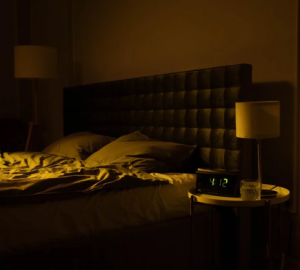
It’s unsafe to read by illuminated screens. Electronic readers without light sources are less distracting than tablets with a backlight. Make sure the room is completely dark when bedtime rolls around. If you have trouble falling asleep because of light coming in through the windows, consider closing the curtains or using a sleep mask. It would be best if you also thought about concealing any equipment that gives out light. If you must get up in the middle of the night, please do so with the lights dimmed. You may use a modest flashlight or dim nightlight to navigate the house at night securely. You should find it less difficult to drift off again.