



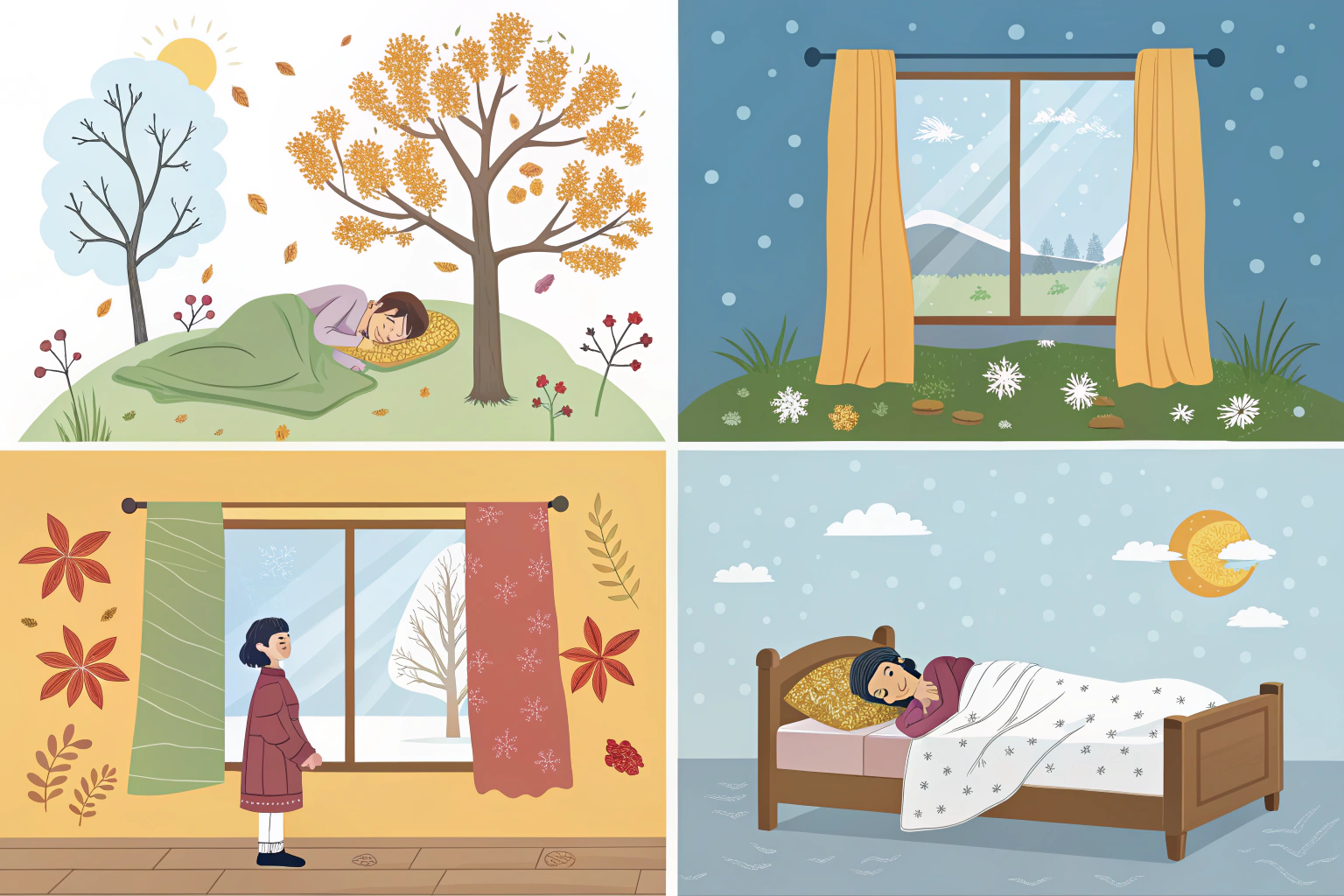
Our bodies are finely tuned to nature’s rhythms. The changing seasons don’t just affect the weather outside; they can also influence how well we sleep. If you’ve ever felt sluggish in winter, wide-awake in summer, or thrown off during seasonal transitions, you’re not imagining things.
At the Sleep Research Foundation, we explore how environmental shifts impact sleep quality and what you can do to stay well-rested year-round.
Why do Seasons Affect Sleep?
Sleep is regulated by our circadian rhythm, an internal 24-hour clock that responds to light, temperature, and other environmental cues. Seasonal changes alter these cues, which can disrupt our sleep patterns.
1. Light Exposure and Melatonin Production
Daylight is one of the most powerful influences on our sleep-wake cycle. In summer, longer days mean more sunlight exposure, while in winter, shorter days can make us feel sleepy earlier.
- Summer: Extra daylight delays melatonin production, making it harder to fall asleep at your usual bedtime.
- Winter: Limited daylight triggers earlier melatonin release, leading to increased sleepiness and sometimes seasonal affective disorder (SAD).
What to Do:
- In winter, try light therapy in the morning to boost alertness.
- In summer, dim indoor lights an hour before bed to signal your body it’s time to wind down.
2. Temperature Fluctuations
Your body temperature naturally drops before and during sleep. Extreme seasonal temperatures can interfere with this process.
- Summer heat can cause restless sleep, night sweats, and frequent awakenings.
- Winter colds can make it harder to fall asleep or cause you to wake up shivering.
What to Do:
- Keep your bedroom between 18–21°C (65–70°F).
- Use breathable bedding in summer and layered blankets in winter so you can adjust warmth easily.
3. Seasonal Allergies
Spring and fall bring pollen and other allergens that can cause congestion, sneezing, and itchy eyes, making it difficult to sleep well.
What to Do:
- Wash bedding weekly in hot water.
- Keep windows closed during high-pollen days.
- Use an air purifier in your bedroom.
4. Time Changes and Daylight Saving
Shifting the clock forward or backward by just one hour can disrupt your circadian rhythm for days, or even weeks.
What to Do:
- Gradually adjust your bedtime by 15 minutes per night a few days before the time changes.
- Maintain consistent sleep and wake times year-round.
5. Mood and Seasonal Affective Disorder (SAD)
Shorter days in winter can affect mood-regulating chemicals like serotonin, leading to seasonal depression. SAD often comes with increased fatigue and difficulty waking up.
What to Do:
- Spend time outdoors during daylight hours.
- Consider light therapy under a doctor’s guidance.
- Stay active, exercise helps regulate both mood and sleep.
6. Holiday Disruptions
Festive seasons often bring changes to routines, late-night parties, travel, and irregular meal times can all impact sleep quality.
What to Do:
- Balance social activities with rest days.
- Avoid heavy meals, caffeine, and alcohol close to bedtime.
How Each Season Specifically Impacts Sleep
Spring
- Longer days help boost energy, but allergies can cause poor sleep.
Adjust your sleep schedule gradually to earlier sunrise times.
Summer
- Heat and bright evenings can delay sleep onset.
- Keep your bedroom cool, use blackout curtains, and stay hydrated.
Autumn
- Shorter days can increase evening sleepiness.
- Stick to a consistent bedtime to avoid oversleeping.
Winter
- Low light can cause sluggishness and mood dips.
- Increase daylight exposure and stay physically active.
Year-Round Sleep Hygiene Tips
Regardless of the season, these strategies will help you maintain quality sleep:
- Stick to a Consistent Schedule: Go to bed and wake up at the same time every day.
- Limit Screen Time Before Bed: Blue light delays melatonin production.
- Create a Relaxing Bedtime Routine: Reading, meditation, or gentle stretching can help you unwind.
- Optimize Your Sleep Environment: Quiet, dark, and cool rooms promote better sleep.
- Watch What You Eat and Drink: Avoid caffeine after mid-afternoon and heavy meals before bed.
When to Seek Help
If seasonal changes cause persistent insomnia, excessive sleepiness, or mood disturbances, consult a sleep specialist. Conditions like SAD, chronic insomnia, or sleep apnea may require professional treatment.
Conclusion
Seasonal shifts affect more than just the weather, they influence our body clocks, hormone production, and sleep quality. The good news is, with small adjustments, you can sleep well in any season.
At the Sleep Research Foundation, our mission is to help you understand and improve your sleep through science-based solutions. By aligning your habits with nature’s cycles, you can enjoy restful nights, no matter the time of year.
Frequently Asked Questions (FAQs)
Q1: Why do I feel more tired in winter?
Shorter days and reduced sunlight can increase melatonin production, making you feel sleepier.
Q2: How can I sleep better during summer heat?
Keep your room cool, use light bedding, and take a lukewarm shower before bed.
Q3: Can seasonal changes cause insomnia?
Yes. Shifts in daylight, temperature, and routine can disrupt sleep patterns, leading to insomnia.
Q4: What is the best way to fight winter fatigue?
Increase your daylight exposure, stay active, and maintain a consistent sleep schedule.
Q5: Do I need special bedding for different seasons?
Yes. Breathable fabrics work best in summer, while layered blankets provide adjustable warmth in winter.